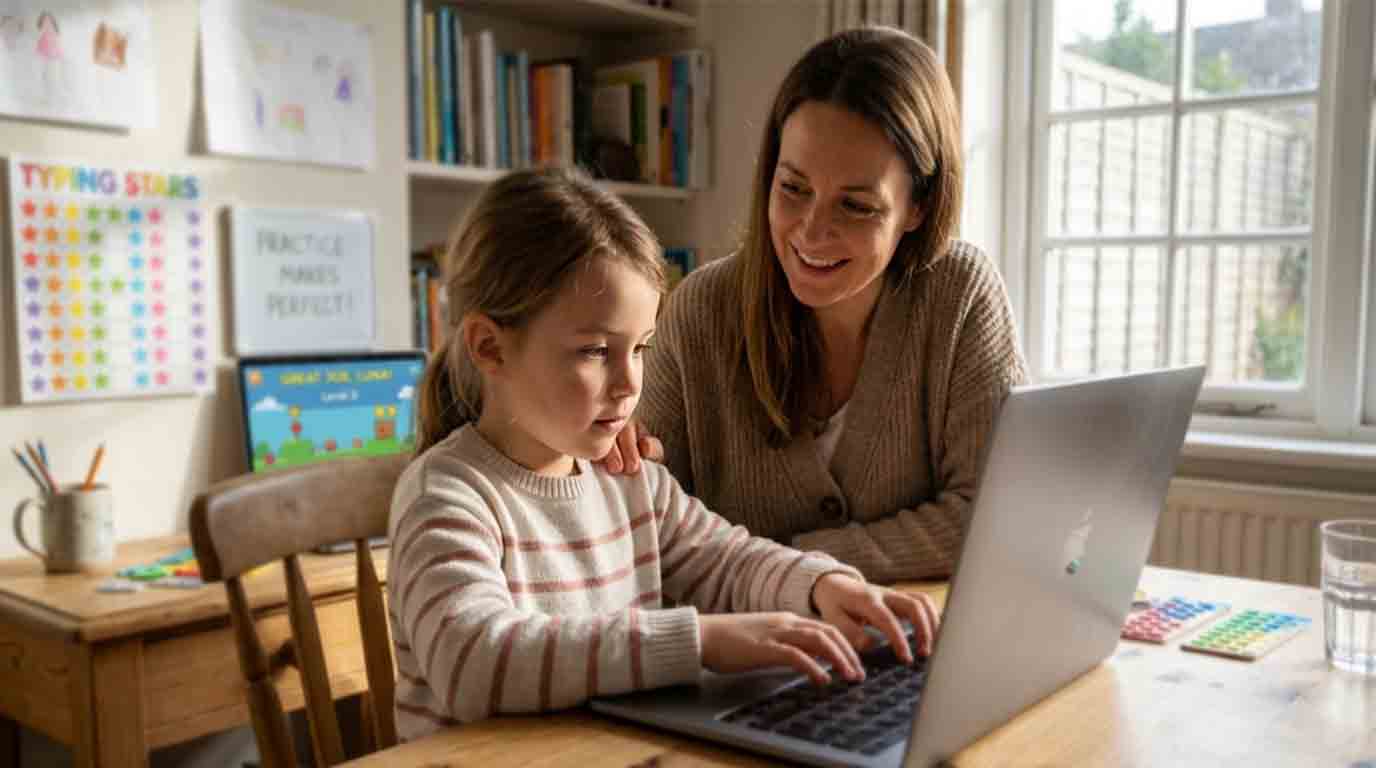
Screens are not leaving our homes anytime soon. Tablets sit on coffee tables. Laptops open after dinner. Phones glow in small hands that are curious and quick. The real question for parents is not how to remove screens completely. It is how to turn them into something meaningful. A device can be passive entertainment, or it can become a playful classroom.
Typing is one of the simplest ways to shift that balance. It feels like a game. It looks like a challenge. Yet it builds coordination, reading fluency, and confidence at the same time. A short session with a 5 minute typing test can transform scrolling time into focused practice that feels exciting instead of forced.
Quick Summary
- Typing can convert passive screen time into structured learning.
- Short, timed activities build focus and fine motor skills.
- Parents can create playful challenges at home with simple tools.
- Consistency matters more than long sessions.
Why Typing Works as a Learning Game
Children love measurable goals. They enjoy seeing numbers change and progress improve. Typing activities offer instant feedback. Words per minute increase. Accuracy percentages rise. Errors become part of the challenge rather than a reason to quit. This sense of progress feels similar to popular puzzle games featured in our kids interactive quiz games, where each correct answer boosts motivation.
Typing also strengthens hand eye coordination. Small fingers learn where keys sit without constant searching. That builds muscle memory. Muscle memory reduces frustration during school assignments later. A child who can type smoothly spends more time thinking about ideas and less time hunting for letters.
There is also a literacy benefit. When children type words repeatedly, spelling patterns stick. They see the structure of sentences. They begin to connect written language with rhythm and flow. Research on skill acquisition published by the American Psychological Association shows that consistent, structured repetition strengthens memory pathways and supports long term retention and automaticity.
Setting Up a Screen Time Routine That Feels Fun
Structure makes all the difference. Random practice feels like homework. A predictable routine feels like a game night ritual. Start small. Five minutes after school. Another five minutes before dinner. Keep it light. Keep it positive.
Children respond well to visual cues. A simple chart on the fridge can track improvement. Stars for accuracy above ninety percent. Stickers for beating a personal record. This mirrors the reward systems used in many play based learning activities, including ideas shared in our guide on healthy screen time limits, where boundaries and incentives work together.
Routine should include variety. Change the typing text theme each week. One week could focus on animal facts. Another on silly jokes. Another on short inspirational quotes. That prevents boredom and keeps curiosity alive.
Three Core Benefits Parents Notice Quickly
Parents often see improvements within weeks. The changes are subtle at first, then noticeable.
1. Increased Focus
Short timed sessions train children to concentrate without distraction. Five minutes of steady attention builds stamina. Over time, this extends to reading and homework tasks.
2. Better Confidence
Beating a previous score feels powerful. Children begin to say, I can do this. That belief spills into other areas like math drills or writing assignments.
3. Stronger Independence
Once children know the routine, they can start sessions on their own. Independence reduces daily friction between parent and child.
Designing a Weekly Typing Game Plan
Consistency beats intensity. A simple weekly plan keeps things engaging without overwhelming your child.
| Day | Focus Theme | Goal |
|---|---|---|
| Monday | Animal Facts | Accuracy above 90% |
| Wednesday | Jokes and Riddles | Beat previous speed |
| Friday | Short Stories | No more than 5 errors |
This format gives children something to anticipate. Monday feels different from Friday. Goals rotate. The activity stays fresh.
Keeping Motivation High Without Pressure
Children shut down when pressure feels heavy. Keep language positive. Focus on improvement rather than perfection. Praise effort, not just speed. Say, I noticed how steady your hands were. Or, Your accuracy improved this week.
Breaks matter. After each session, encourage stretching or a quick movement game. Pair typing with physical play. This balance aligns with ideas from activities such as screen free activities, where active breaks support attention and mood.
It also helps to let children teach you. Ask them to explain which keys feel tricky. Invite them to demonstrate proper finger placement. Teaching builds mastery and pride.
Simple Activities You Can Rotate
Variety prevents boredom. Rotate small challenges across the month.
- Speed sprint, one timed session focused only on words per minute.
- Accuracy challenge, aim for zero mistakes.
- Story builder, type a short creative paragraph together.
- Family leaderboard, compare weekly personal bests.
Do not run these back to back in one sitting. Space them across different days. That keeps anticipation alive.
Turning Mistakes Into Teachable Moments
Mistakes will happen. Keys get mixed up. Letters flip. Instead of correcting harshly, slow down the pace. Ask your child to notice patterns. Are mistakes happening on certain keys. Are hands drifting from home position.
Encourage mindful typing. Slow and accurate first. Speed grows naturally once muscle memory strengthens. Children learn resilience when errors are treated as clues rather than failures.
Parents can even create mini detective games. Highlight repeated errors. Let your child solve the mystery of why that key feels tricky. This builds problem solving skills beyond typing.
How Typing Connects to School Success
As children move into higher grades, assignments become longer. Essays grow. Research projects expand. A child who types comfortably finishes tasks faster and with less stress. They can revise more easily. They can express ideas fluidly.
Typing practice also supports digital citizenship. Children learn to communicate clearly in online classrooms. They become thoughtful writers rather than rushed responders. Structured screen time builds discipline that random scrolling never provides.
Teachers often notice students who can type efficiently. These students participate more in collaborative documents and group tasks. Confidence shows up quietly but powerfully.
Making It a Family Tradition
Learning sticks when it feels shared. Join your child for weekly challenges. Set your own goals. Laugh at your mistakes. Celebrate improvements together. This removes the sense that typing is only for school.
Create a small reward ritual. Perhaps Friday evening includes choosing a family movie if everyone completes their sessions. Keep rewards simple and meaningful.
Over time, children associate devices with growth rather than mindless use. That shift is subtle but significant. Screens stop being babysitters. They become tools.
Creating Confident Digital Learners at Home
Screen time does not need to feel like a battle. With intention, it can become a powerful teaching moment. A short structured typing activity each week can shape habits that last for years. It builds focus. It strengthens literacy. It supports independence.
Parents do not need complex apps or expensive programs. A timer. A simple typing challenge. Encouragement. That is enough to begin.
Small consistent steps transform passive scrolling into skill building play. Children gain more than faster fingers. They gain belief in their ability to improve through practice. That confidence carries far beyond the keyboard.