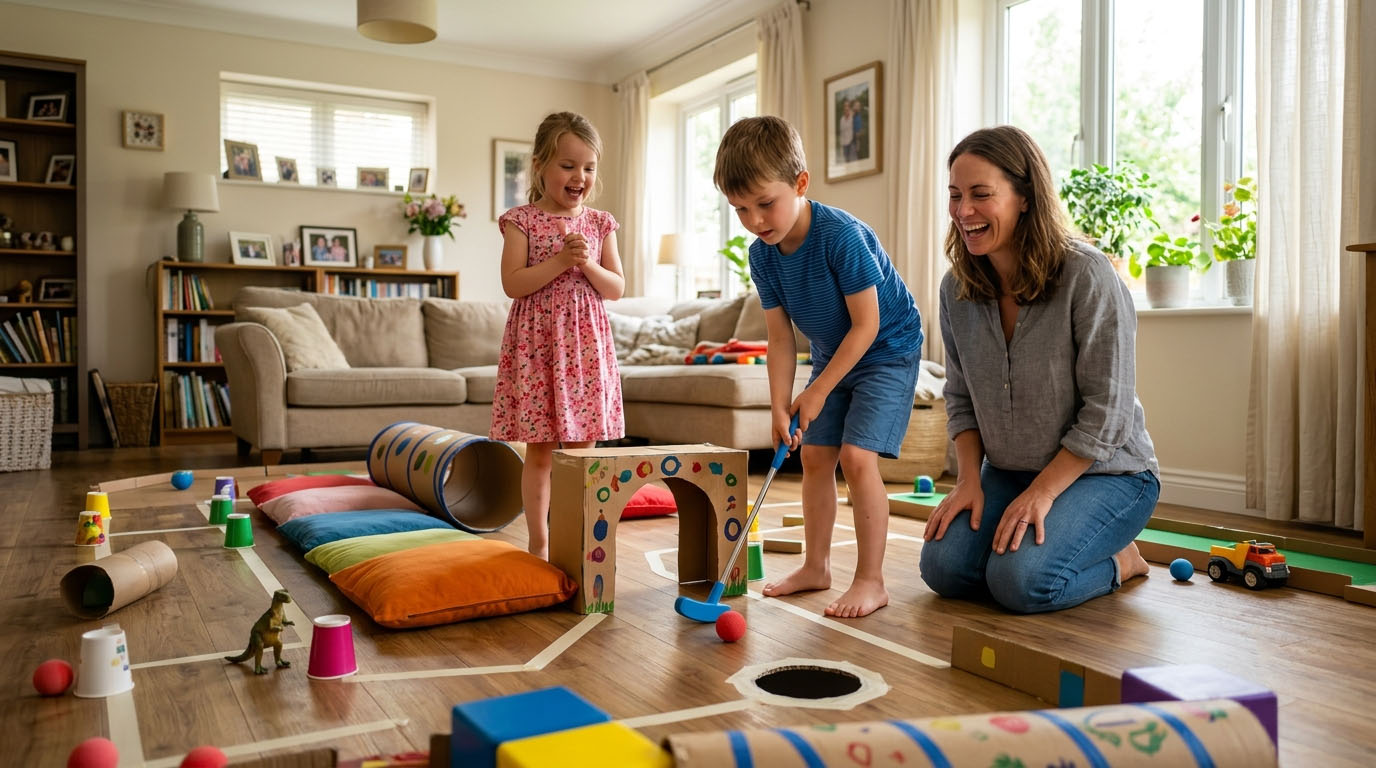
Children do not need a full golf course, a set of expensive clubs, or a long attention span to enjoy golf-inspired play. What they do need is a bit of space, a playful challenge, and a parent who is happy to turn a simple idea into a small adventure. That is what makes golf themed games such a good fit for family life. They bring movement, concentration, laughter, and a sense of progress into one activity. A child can practice aiming at a laundry basket, tiptoe through an obstacle fairway made of cushions, or invent a points challenge in the garden. None of it has to feel serious. The magic is in the mix of fun and focus, especially for children who enjoy games that let them move their bodies while also solving little problems along the way.
Golf also works surprisingly well as a family activity because it can be scaled up or down so easily. A preschooler can roll a soft ball into a cardboard tunnel and feel just as proud as an older sibling trying a mini putting challenge with extra rules. If parents are curious about the basics themselves, reading a few beginner golf tips can help them borrow the structure of the sport without turning playtime into a lesson. The goal here is not to train the next tournament star. It is to give children a fresh way to build balance, patience, hand eye coordination, and confidence while spending time with the people they love most.
Quick Summary
- Golf-inspired games can help children practice coordination, patience, focus, and turn taking through play.
- You do not need formal equipment. Soft balls, cups, tape, cardboard, cushions, and toy clubs can do the job.
- The best activities feel light and silly while still giving kids a clear challenge to solve.
- Simple setup choices make the games safer, more age appropriate, and easier to repeat at home.
Why golf themes work so well for children
Many children love games that give them a target. They like seeing where a ball lands, how close they got, and whether they can do a little better next time. Golf-inspired play taps into that natural interest without requiring the full structure of the sport. A child gets a goal, a path, and a chance to repeat a skill in a way that feels satisfying. That matters because repetition is often how children build control. They do not want a lecture on balance or body awareness. They want to knock a foam ball through a tunnel, clap when it works, and try again with a new challenge.
There is also a calmer rhythm to golf-style play that can be very useful for families. Not every active game needs to be loud, frantic, or built around running in circles. Some children love that style of play, but others do better with activities that still involve movement while giving them more time to think. A putting challenge across the living room or a homemade mini course in the garden offers action without chaos. That makes these games especially helpful on days when a child has lots of energy but still needs a bit of structure. It can also make playdates smoother because children are working toward a shared goal instead of colliding in a free for all.
Parents who already enjoy simple outdoor games may notice that golf-inspired activities fit naturally alongside other movement based play. They sit somewhere between a scavenger hunt, an obstacle course, and a beanbag toss. That overlap is useful because it means you can mix ideas together. A child might start with a target game and then finish by weaving through cones or hopping to the next station. If your family already enjoys active afternoons, ideas from outdoor playdate ideas for kids can pair nicely with a mini golf setup to create a fuller play session rather than one isolated game.
What children can learn while they play
It is easy to think of golf-inspired games as just a way to keep children occupied for half an hour, but they can do more than fill time. These games ask children to control force, adjust their aim, and manage frustration when a shot does not go where they expected. That combination is useful because it builds physical skill and emotional skill at the same time. A child who overshoots the target has to try again, often with a slightly calmer body and a better sense of what to change. That is real learning, even if it looks like pure fun from the outside.
Children also get practice with sequencing and planning. If there are three stations in a mini course, they begin to understand that one action leads to the next. They learn to wait for their turn, remember the order of the game, and hold a small goal in mind. Younger children may simply enjoy the process of getting the ball from point A to point B. Older children may start experimenting with angles, surfaces, and strategy. That makes the same activity useful across a fairly wide age range, which is a relief for parents trying to entertain siblings with different skill levels.
There is a good wellbeing case for this kind of playful movement too. Regular physical activity supports children’s health, mood, and sleep, and it does not have to happen through organized sport alone. The WHO fact sheet on physical activity is a useful reminder that active play counts. A home mini golf challenge will not replace a full day of outdoor movement, but it can absolutely be part of a healthy, screen-light routine that helps children use their bodies and settle their minds.
Setting up for success without buying a golf kit
The best part of golf-inspired play is how little you actually need. A soft ball, a plastic cup, masking tape, and a hallway can be enough to create a game. If you have toy golf clubs, great. If not, children can roll or gently tap balls with a cardboard tube, a pool noodle segment, or even their hands in certain games. The point is not to recreate a real golf lesson. The point is to borrow the fun parts of golf, targets, holes, aiming, gentle control, and turn them into something child friendly.
Try to think in terms of stations rather than one big setup. A station might be a cup taped to the floor, a tunnel made from two books and a tray, or a chalk circle outside that acts as a scoring zone. When the game is broken into small pieces, children stay interested for longer because each section feels new. It also helps parents manage different ages. One child might use a larger target placed nearby, while an older sibling aims for a smaller target from farther away. You can keep the same overall game while adjusting the difficulty quietly in the background.
Safety matters more than realism. Use soft balls indoors. Clear slippery rugs out of the way. Keep breakable objects well away from swinging space. If children are using anything club shaped, set a simple rule that nobody swings unless the area is clear and an adult is watching. This sounds obvious, but it makes the difference between a fun family game and a vase related disaster. If you want a calmer indoor version for wet weather, pairing golf challenges with other screen-free activities can help you build a whole afternoon that feels varied without becoming overstimulating.
A simple guide to matching the game to the child
| Age range | Best game style | What to focus on | Helpful setup tip |
|---|---|---|---|
| 2 to 4 years | Rolling balls into big targets | Turn taking, simple aiming, cause and effect | Use large baskets, tunnels, and short distances |
| 4 to 6 years | Mini courses with 2 to 4 stations | Balance, patience, following simple rules | Add obstacles made from cushions or cones |
| 6 to 9 years | Scoring games and target zones | Control, strategy, friendly competition | Use point values and let children help design holes |
| 9 years and up | Skill challenges and timed courses | Problem solving, self correction, consistency | Make rules slightly harder and vary the surfaces |
Seven fun golf-inspired games to try at home
Below are seven ideas that work well because they feel playful first and sporty second. You can run them one at a time, rotate them across an afternoon, or combine two or three into a mini family tournament. The more children can help name the holes, decorate the targets, or invent the rules, the more invested they usually become.
1. Laundry basket putting
Place a laundry basket, storage box, or large bowl a short distance away and let children roll or tap a soft ball into it. Start close and move the basket farther back as confidence grows. This is one of the easiest entry points for toddlers and preschoolers because success comes quickly. You can turn it into a story game by pretending the basket is a cave, pirate ship, or dragon’s mouth.
2. Cushion fairway challenge
Use cushions, books, or pool noodles to create a winding path on the floor. The child has to move the ball through the fairway without touching the edges. This works well for children who like a little more structure because it feels like a puzzle. It also encourages gentler taps and better body control than simply hitting the ball as hard as possible.
3. Colour cup points game
Set out cups in different colours and assign each one a score. Yellow might be 5 points, blue 10, and red 20. Children choose where to aim based on how confident they feel. This introduces decision making in a very light way. A child might aim for the easier cup first, then go for a higher score later once they feel steady.
4. Garden safari golf
If you have outdoor space, place toy animals around the garden and make each one a target stop. The child has to get the ball close to the tiger, under the bench near the elephant, or through a chalk circle beside the giraffe. This works especially well with children who enjoy pretend play and need a narrative to stay engaged.
5. Obstacle tunnel putt
Create tunnels from cardboard boxes, chairs draped with blankets, or large building blocks. The goal is to send the ball through the tunnel and into a target beyond it. This is a great rainy day option because it makes the room feel transformed. Children also tend to enjoy crawling through the tunnels themselves after their turn, which adds extra movement.
6. Family scorecard challenge
Older children often love having something to track. Set up three to five simple holes and give everyone a homemade scorecard. Count how many taps it takes to finish each hole, then total the scores at the end. Keep the tone light. You can hand out silly prizes such as “best celebration dance” or “most determined player” so the focus stays on fun rather than winning.
7. Trick shot treasure hunt
Hide small stickers, stamps, or paper treasure tokens at the end of different holes. Each completed shot earns a clue or a collectible item. This blends golf with a scavenger hunt, which is ideal for children who lose interest in repetitive sports style games. The hunt keeps the momentum going and gives every hole a little surprise at the end.
Keeping the energy playful instead of pressured
The fastest way to drain the joy from a golf-inspired game is to make it feel like a test. Children can sense that shift immediately. A parent who starts correcting every hand position or commenting on every miss usually ends up with a frustrated child and a shorter play session. It works much better to praise effort, patience, and experimentation. “You slowed down and aimed that one really carefully” is more useful than “No, hold it like this.” The first response helps the child notice what worked. The second often makes them feel as though they are doing the whole game wrong.
It also helps to build in moments where success is almost guaranteed. If every target is difficult, younger children may lose patience long before they get the hang of it. Give them one easy win early. Let them hit from a closer line. Use a bigger target. Celebrate the ball reaching the tunnel even if it does not make it all the way through. That sense of progress keeps children engaged and makes them more willing to try harder versions later.
Families with more than one child should think carefully about balance here too. Siblings do not need identical challenges. They need fair challenges. A four year old and an eight year old can absolutely play the same course, but the younger child may need a closer starting point or larger scoring zone. That is not cheating. It is just good game design. The point is shared fun, not a rigid set of rules copied from adult sport.
How to turn one game into a full afternoon activity
If your child really enjoys golf-inspired play, you can stretch it into something bigger than a ten minute challenge. Start by letting them help design the course. Ask where the tunnel should go, what the points should be, or what funny name each hole should have. Children love ownership, and once they feel the game belongs partly to them, they tend to stay engaged for much longer. You can also add mini jobs between holes, such as collecting the balls, moving the target signs, or choosing the next family challenge.
Another easy way to extend the activity is to mix movement styles. After one putting station, add a balance task where the child walks heel to toe to the next hole. After a target shot, add a beanbag toss or a hopscotch square. This keeps the body moving in different ways and stops the session from feeling repetitive. It also means golf becomes one playful theme inside a broader active afternoon, which is often a better fit for younger children with short bursts of focus.
Food and rest breaks help too, especially for playdates or siblings with different energy levels. A simple pause for fruit, water, and a quick chat about favourite holes can reset the mood and stop tiredness from turning into grumpiness. The whole activity becomes less about performance and more about family rhythm. That is often the sweet spot with children. A game is fun on its own, but a game that creates shared memories tends to last much longer in their minds.
Small tweaks for shy kids, busy kids, and children who get frustrated easily
Not every child will react to a golf-inspired game in the same way. Some children throw themselves into any activity that involves a ball and a score. Others are more cautious, especially if they worry about getting things wrong. For shy children, it helps to start with cooperative versions rather than competitive ones. You and your child can work together to get the ball through the course in a certain number of taps. That changes the mood immediately. Instead of being judged, the child feels supported.
Children with lots of energy often benefit from shorter holes and quicker rotation. Keep the targets close, change stations more often, and add movement between shots. They may not want a careful putting challenge that lasts ten minutes, but they might love a fast family circuit with five mini tasks. Children who become frustrated easily usually do better with visible progress. Use larger targets, easier early wins, and lots of calm encouragement. You can even create “bonus holes” where there is no wrong way to finish, just a silly action like tapping the ball through a tunnel and roaring like a lion at the end.
These adjustments are not about lowering expectations. They are about matching the activity to the child in front of you. Play works best when children feel invited in, not measured against a fixed standard. Once they feel safe and capable, many of them naturally start making the game harder for themselves anyway.
Where the real value shows up
Parents sometimes look for activities that do everything at once. They want movement, creativity, bonding, learning, and a break from screens, ideally with no mess and very little prep. Nothing ticks every box every time, but golf-inspired games come surprisingly close. They offer physical activity without requiring a huge space. They support concentration without asking children to sit still. They can be calm or lively depending on how you set them up. Most of all, they give families a way to be playful together without needing perfect weather, expensive gear, or a packed schedule.
That is probably the biggest reason these games are worth trying. They turn ordinary materials into a shared challenge. A cup becomes a hole. A hallway becomes a fairway. A rainy afternoon becomes something children talk about again at bedtime. That kind of play does not need to look impressive from the outside. It just needs to feel good while it is happening. If a child laughs, moves, focuses, and asks to play again tomorrow, the game has done its job beautifully.